The Moon is believe to have form in a mammoth impact when a Mars - sized planet collided with the primeval Earth . This object isnicknamed Theia , after the Titaness and goddess of precious metals and gem , and female parent of the Selene ( the Moon ) in Hellenic mythology . New research now suggests that Theia is not completely go – huge ball of it might still subsist inside our planet .
Around the Earth ’s core , scientists believe that there are two heavy structures call low - shear speed provinces ( LLSVPs ) . One is underneath west Africa and the other underneath the Pacific . They are 1,000 km ( 600 Swedish mile ) duncish and stretch for several thousand kilometers . Some researcher now think that these blobs are chunk leftover by Theia .
“ This crazy idea is at least potential , ” Qian Yuan , a PhD student in geodynamics at Arizona State University toldScience . Yuan presented his research at the52nd Lunar and Planetary Science Conference last week .
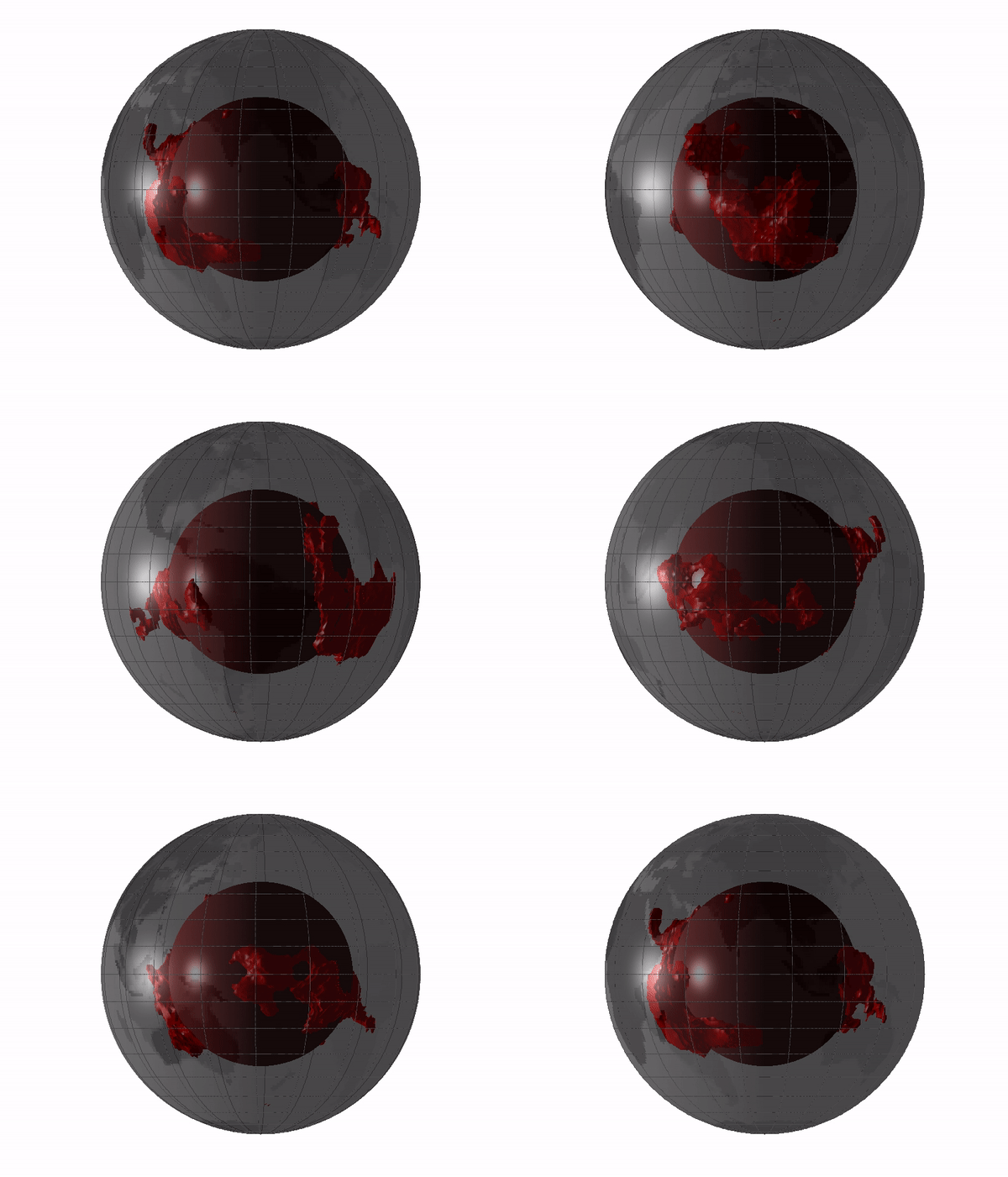
The musical theme that these structures were piece of Theia has been discussed before , but this Modern work flux several piece of grounds in a coherent scenario . Theia merged with Earth , and their magnetic core combined into one . Simulations extend by the researchers show that Theia ’s mantel was a mo denser than Earth ’s own , and this would tolerate a tumid portion of its mantlepiece to survive . The range from the simulations suggests rock 1.5 to 3.5 percentage denser than Earth ’s own . Previous field have suggested that the LLSVPs density is within that range .
The simulation also suggests that Theia might be bigger than previously think – maybe as big as Earth . After all , the LLSVPs contain six time more mass than the whole Moon . So the impactor , if these structures are from outer space , must have been quite massive .
While the evidence presented offer a decent picture , there are many doubt still open regarding these structures that might bear on this interpretation . The Interior Department of our satellite is studied using seismic waves and models , so there could be errors lurking in there , creating a less than accurate purview . The LLSVPs might not be as dense or dense or built in the way we believe they are . So a big dense Theia might not be behind these blobs .
The work has been submitted for equal - critical review to Geophysical Research Letters and it will sure as shooting proceed to be discussed . The LLSVPs are a generator of continuous interest . They have been even weigh as apotential sourceof a future super clap .
