When you buy through links on our site , we may realise an affiliate commission . Here ’s how it works .
Scientists have extracted DNA from the skeletal cadaver of several nineteenth - century sailor who died during the badly - fatten out Franklin Expedition , whose goal was to navigate the fabled Northwest Passage .
With a unexampled genic database of 24 junket appendage , researchers hope they ’ll be capable to discover some of the bodies dispel in the Canadian Arctic , 170 year after one of the worst disasters in the chronicle of arctic exploration .
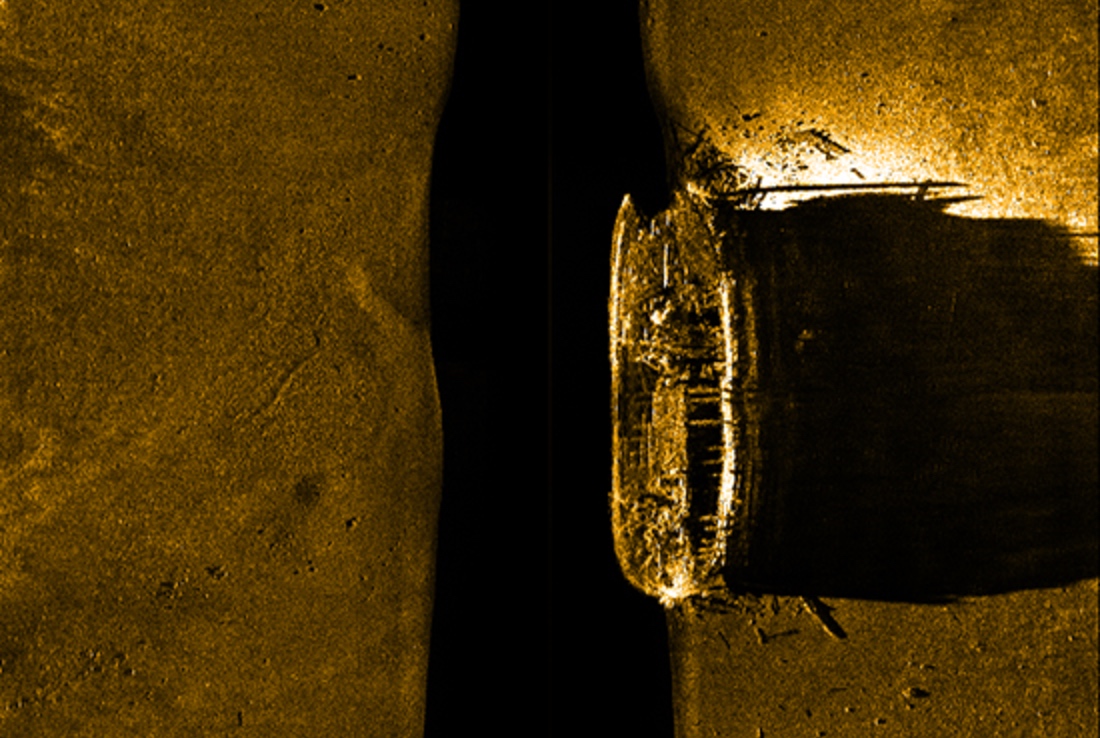
A sonar image showing the ill-fated HMS Erebus shipwreck.
The results were published April 20 in theJournal of Archaeological Science : story .
A doomed voyage
Led by Sir John Franklin , a British Royal Navy captain , the 129 - phallus gang embark in 1845 in search of a sea itinerary that would link the Atlantic and Pacific ocean . The sailors were doomed after their ships became trap in thick sea ice in the Canadian Arctic Archipelago in 1846 . [ In Photos : Arctic Shipwreck Solves 170 - Year - Old Mystery ]
The last communicating , a short promissory note from April 25 , 1848 , indicated that the surviving gentleman’s gentleman were abandon their ships — the HMS Erebus and HMS Terror — just off King William Island and embarking on a harsh journeying to the south toward a trading post on the mainland . None of them seems to have made it even a fifth of the agency there .
Over more than a century , lookup parties and scientists have discovered the remains of several Franklin sailors in boat and makeshift campsites scattered along this itinerary . The bones bear cicatrice of disease like scurvy . Some even have thesignatures of cannibalism , according to one recent study that corroborate the 19th - century reports of Inuit witnesses who had identify piles of fractured human pearl . Several artifacts from the HMS Erebus , includinga medicine nursing bottle and tunic buttons , as well asthe ship ’s bronze chime , have also been uncover .

In the late look at the array of bones , a squad led by Douglas Stenton of Nunavut ’s Department of Culture and Heritage , a territory in northerly Canada , conducted the first transmissible tests on appendage of the expedition who died following the desertion of the ship .
Stenton and his co-worker were able-bodied to get DNA from 37 bone and tooth sample distribution found at eight dissimilar sites around King William Island , and they found the bearing of at least 24 different members of the expedition . Twenty - one of these individuals had been found at placement around Canada ’s Erebus Bay , " confirming it as a location of some grandness following the desertion of Erebus and Terror , " Stenton tell Live Science .
The researchers say their results propose a more accurate count of the turn of pleasure trip member who give way at unlike locating . A few of the early fatalities were buried at Beechey Island and their frozen remains , which were disinter by archaeologists in the 1980s , were spookily well - bear on . The off-white of the sailors who died after empty the ships , however , were much more spread , dispersed by beast scavenging and human activity .

Stenton said that , in one case , bones from the same someone were ground at two different sites about a mile ( 1.7 kilometers ) from each other . The researcher consider that an 1879 hunt company most likely found some of the castanets , and then expect them to the new site and reburied them .
Stenton and co-worker hope they will finally be able to practice the database to key the crew members and better remodel what happened in the terminal months of the expedition .
" We have been in touch with several descendant who have state interest group in take part in further enquiry , " Stenton said . " We hope that the publication of our initial study will encourage other descendants to also consider participating . "

Women among the dead?
Four samples in the study were identified as female , which does n’t fit with the picture of an all - virile expedition gang . The authors find out the opening that these samples came from Inuit women because the genetic and archaeological grounds colligate with these four mortal also suggests they were European . [ Tales of the 9 Craziest Ocean Voyages ]
" We were surprise by the result for those samples because in contrive the psychoanalysis it had n’t occurred to us that there might have been charwoman on gameboard , " Stenton evidence Live Science .
Stenton and his colleagues remember the most potential account for this discrepancy is that ancient DNA discipline commonly fail to amplify the Y chromosome ( the male gender chromosome ) due to insufficient quantity or quality of DNA , which can result in false distaff identifications of the dead . However , the researchers noted that it was n’t unheard of for women to serve in disguise in the Royal Navy .

" Some of these women were smuggled onboard [ the ] ship , and others mask themselves as humankind and lick alongside the crew for months or years before being detected or intentionally revealing themselves to be distaff , " the authors write .
They name event such as Mary Anne Talbot , who served on two Navy ships during the Napoleonic wars of the 18th century before being discover out after being offend . regrettably , Stenton say he does n’t suppose it will be potential to definitively say whether the four Franklin samples are really just fake outcome , but his team concluded that it would have been very unlikely for so many women to be serving secretly on this voyage .
Original article on Live Science .


